terenga, senegal style
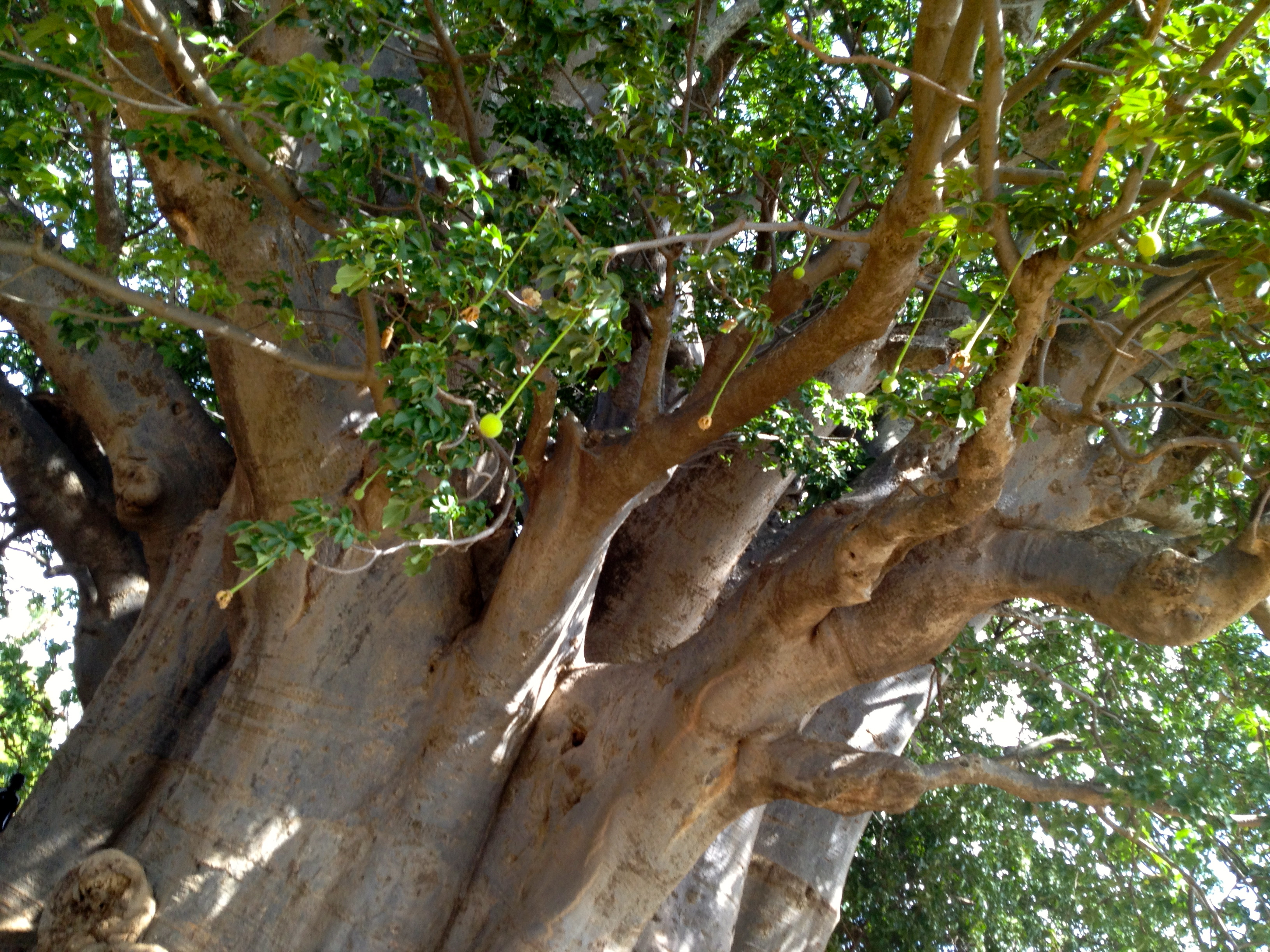
the baobab tree
our summer journey begins just as the uae sets about preparing for ramadan. we leave the desert of the western region after work and head for abu dhabi city where we spend the evening having henna put on our hands and enjoying an amazing meal of delicious aged beef and good wine while overlooking the grand mosque. in the wee hours of the morning, after very little sleep, we board our plane bound for senegal. after a quick transfer through doha and several hours flying, we land in algiers. we have eight hours to spare before our flight to dakar departs and we are not allowed to leave the algiers airport due to visa restrictions, so we are in no hurry on this transfer! as we exit the plane, we are met by an airport duty manager, lami, holding a sign with our names printed across. deni and i have managed to get separated from pam, so lami sends his colleague to find her. we have no time to offer a description of our friend, however, within minutes he returns with pam – “how did you find her?” i ask, “she has the same marks on her hand as you”, he replies, referring to our henna. lami takes our passports, writes us boarding passes for our next flight, and asks us to follow him. we wander down stairs and through corridors to immigration where the line is long and the air is hot. lami leads us off to the side and asks us to wait – away he goes with our passports in hand. he returns and says “follow me, please”. back up the stairs and through more corridors to the security check where we are taken to a private lane. we run our backpacks through the strip and walk through the x-ray. next, lami takes us to an airport cafe and says “go enjoy some coffee, i will come back”. we are completely perplexed – we were just given a private escort through the entire immigration and security process without having to wait in a single line and we have no idea as to why.
at the cafe we are seated and brought coffee, water and a lunch of couscous with beef and are told “it is on offer, no need to give money”. what? what is going on here? when lami returns to check on us, i ask “how did you know it was us?” he says “i see your names, they did not look like african names, they look like names of pretty ladies with green eyes” – he is never able to give us an explanation as to why we are given this special treatment. but he continues to check on us for the remainder of our layover in algiers.
sitting in the airport, i listen to the languages wafting through the air. in algeria both arabic and french are spoken, as well as a local dialect of catalina. the arabic is made up of the same words as i hear in the uae, but the accent is heavily french which makes it sound so much softer than the language of the gulf. and hearing the french takes me to haiti in my mind and heart and i long for the busy streets, hot days, friendly smiles, and the beautiful language of the little caribbean nation.
we land in the dakar airport late friday night where we are met by a big moon and warm breeze. after a long, tiring, and confusing tangle through immigration, we leave the airport by taxi to meet marie at our hotel. the next morning, we have a leisurely breakfast and i secure a sim card, next we embark on the journey south to the little beach town of saly, driven by a beautiful and very pregnant senegalese woman, mama.
in saly we are staying at the beautiful and very typical senegalese hotel. it is a small resort village made up of immaculately kept round bungalows with thatched palm roofs that surround an outdoor restaurant, bar, and pool. i have done very little research on senegal – my knowledge of the country is limited: it is majority muslim, it was colonized by the french so the national language is french with very little – if any – english spoken, one is required to have proof of a recent yellow fever vaccine to enter, there is a nature reserve where one can “safari” near the town of saly, and, while it is poor by western standards, its economy is stabilizing thanks to recent influx of tourism and a strong fishing trade.
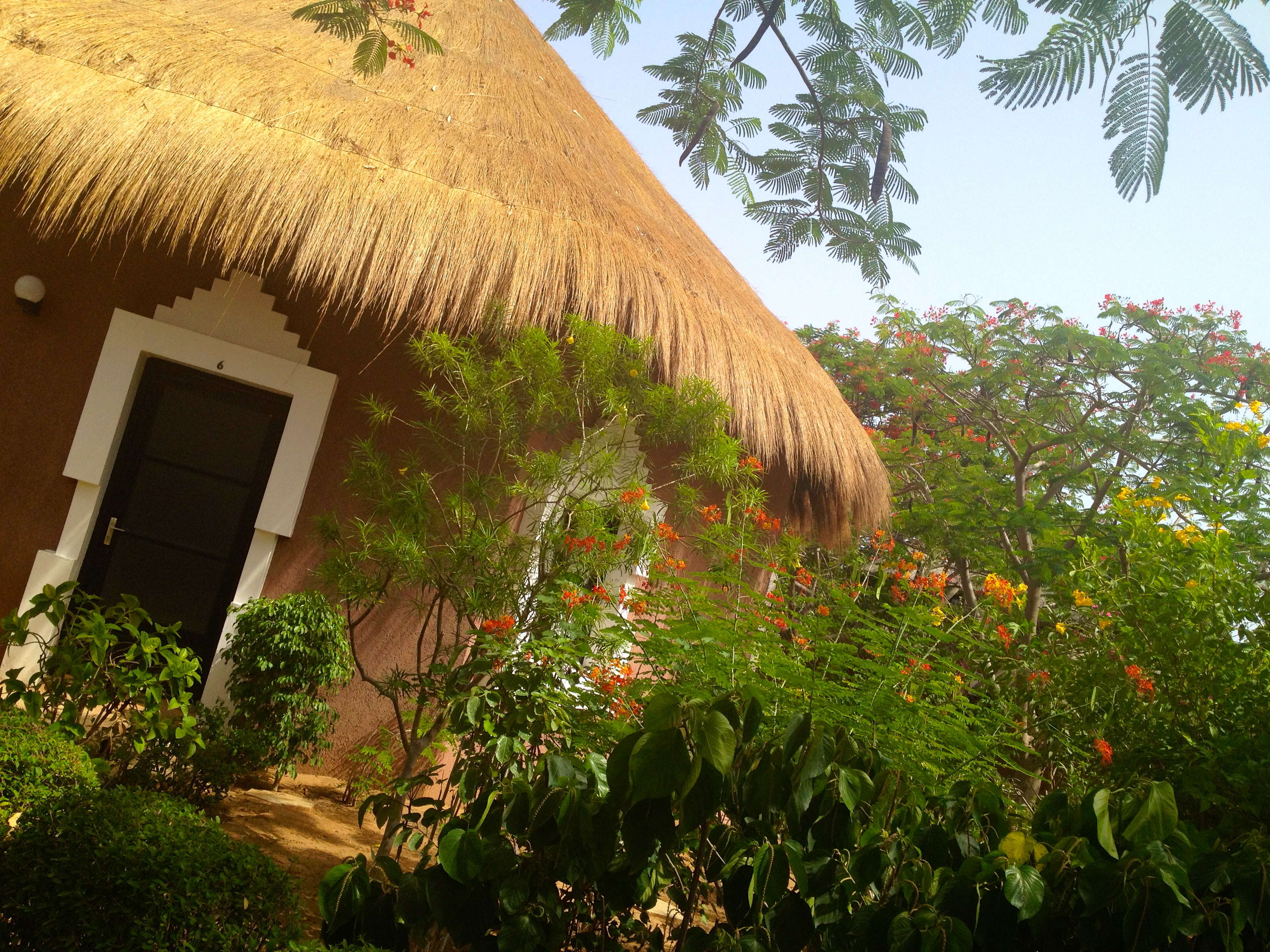
our bungalow
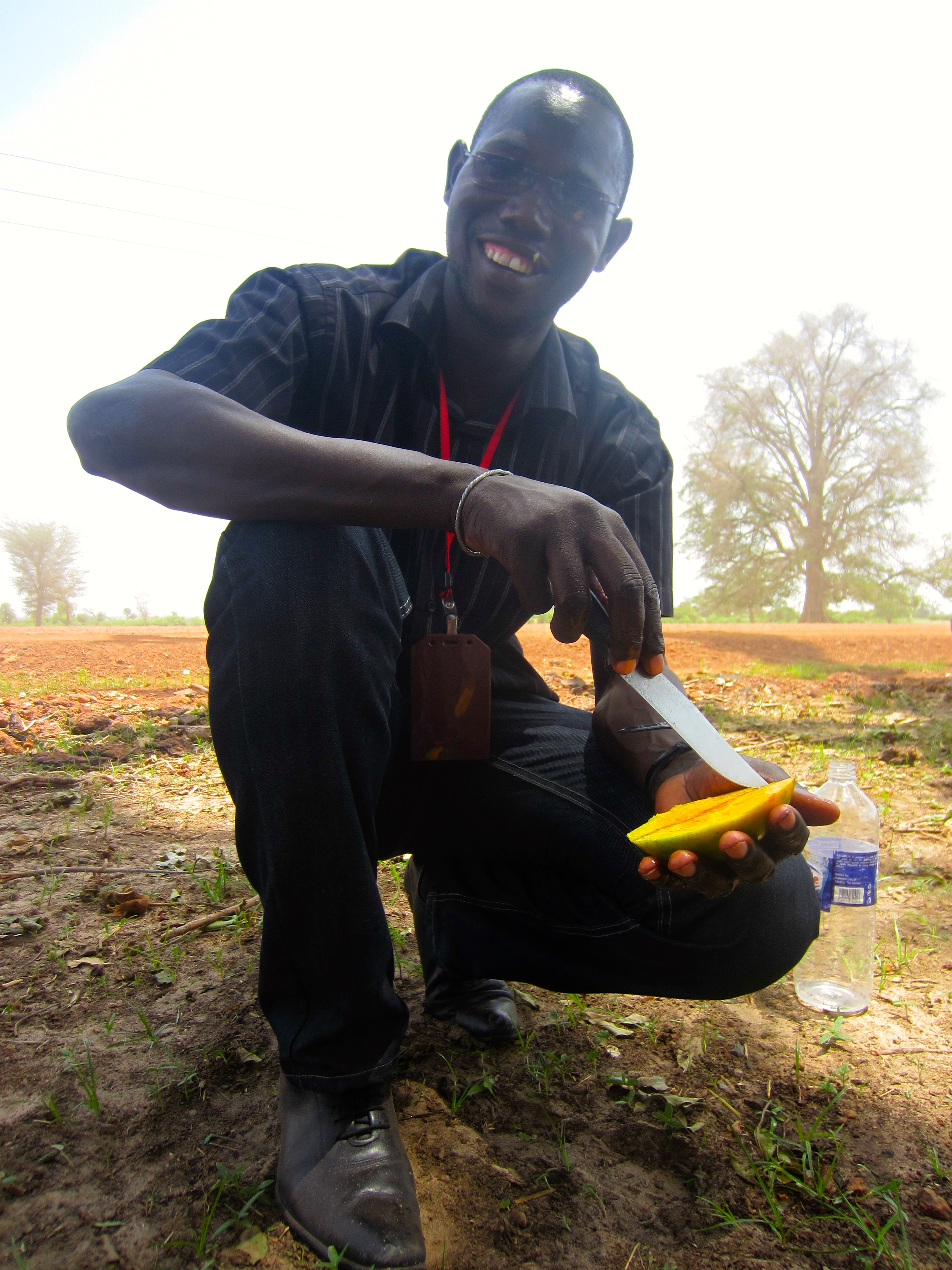
babakar, our amazing guide
in the morning we meet babakar, a local tour guide, who i immediately like. he is tall and dark with long legs and an amazing smile. he is warm and friendly and his english (along with the five other languages he speaks) is excellent. we agree to spend three days touring the south of senegal with him. over the next few days babakar takes us to the bandia nature reserve for a “safari” where i stand less than 20 feet from two wild white rhinos and feel like a complete fool. in an open-air truck he takes us 2 hours to the northeast of dakar to lake retba or “lac rose” (pink lake) which really is pink due to an alge in the water that produces a reddish pigment using sunlight to create energy, thus turning the water pink. lake retba has an extremely high salt content and salt is “mined” here, we spend the afternoon wandering the hills of salt that are sitting out to dry and be cleaned for export.
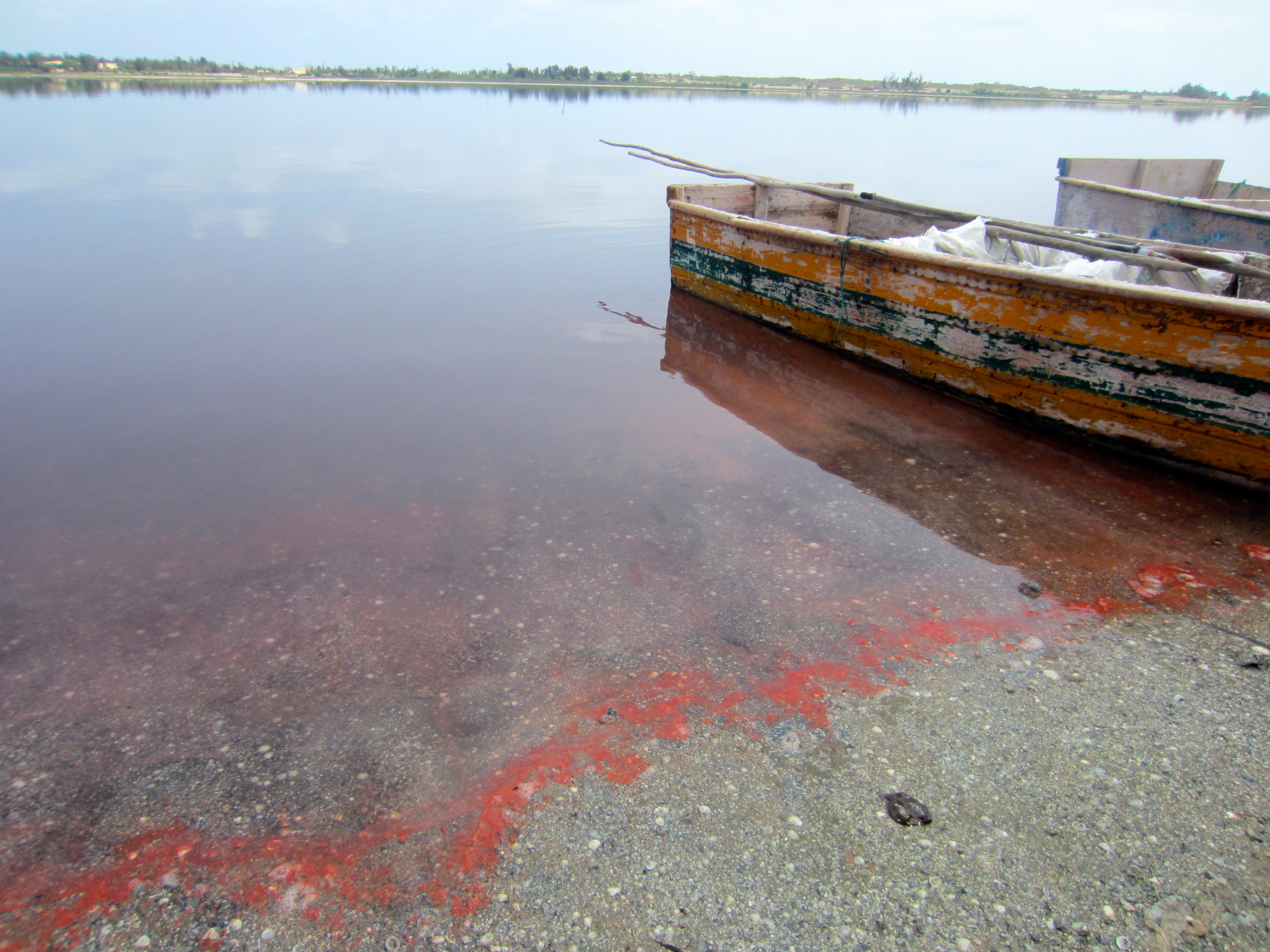
the pink lake
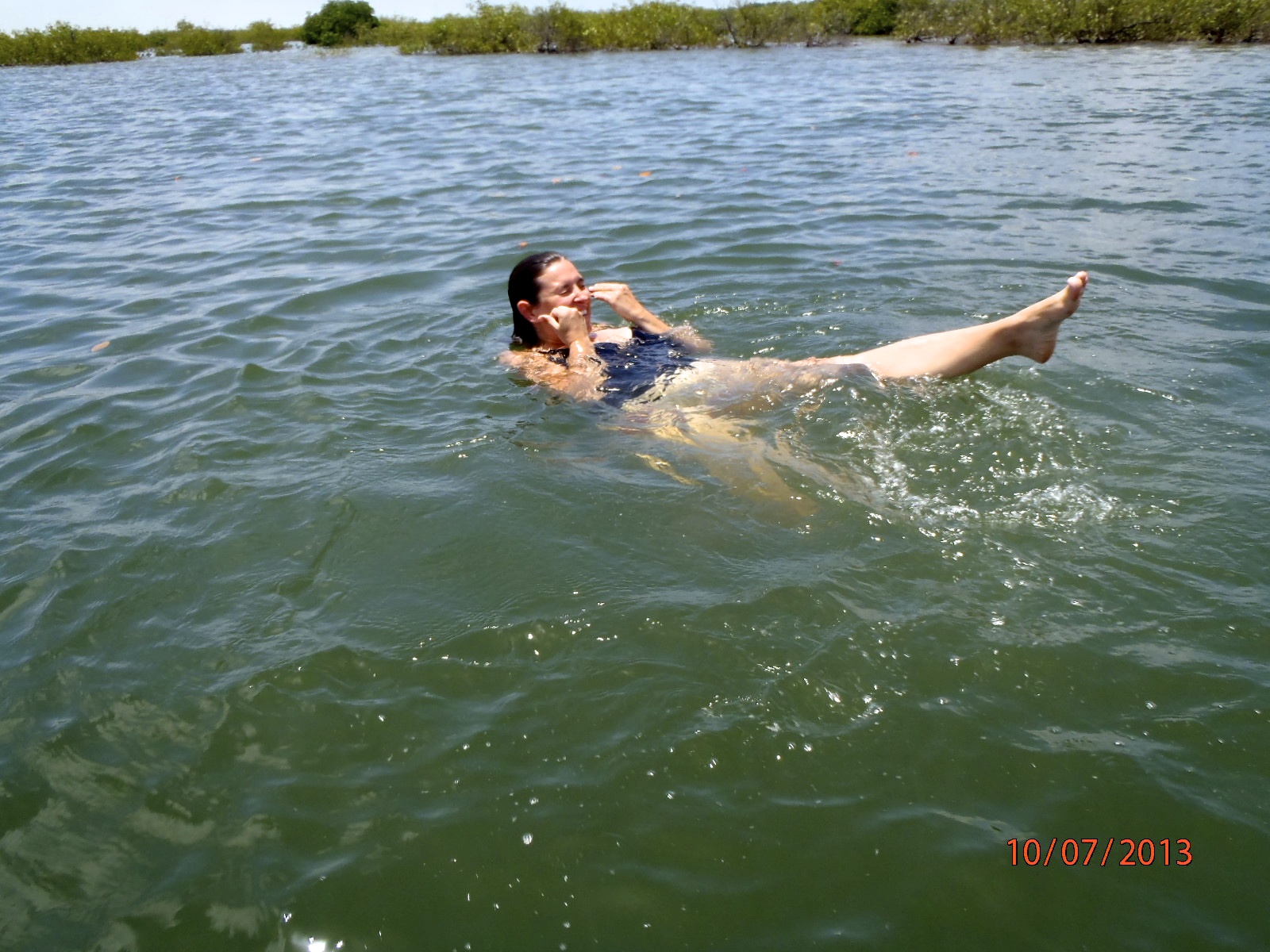
swimming the delta
babakar takes us to the saloum delta, formed by the meeting of the rivers sin and saloum, where i swim through the mangroves and taste the delicious salt on my lips. on saloum island we feast on the beach of fresh fish and prawns, feeding the many stray cats our scraps. we visit the welegara village of the serer people. the serer were animist and still practice much of the mysticism of their heritage intertwined with islam from the north and catholic of the french. we are invited into the village as family, we dance with the women and children as the men play drums, we learn how to make couscous mixed with the fruit of the baobab tree to aid in digestion. we share laughs and smiles with the serer and are asked to stay. i consider it.
next we’re off the the “palm forest” where we find the nguenanae village of the paul ethnic group. these are nomadic cow-herding people who believe the cow to be sacred. the paul are very conservative in their islamic beliefs, they do not inter-marry with other religions or tribes, and they are protective of their relatively light skin tone.

welegara village of the serer people

nguenanae village of the paul ethnic grou
the national tree of senegal is the baobab tree. they are beautiful and huge with amazing white flowers called “monkey bread” because the monkeys love them! we see the largest baobab tree in the country that is believed to be over 600 years old.
we visit joal or “shell” island – an island south of dakar. the island is linked to the mainland by a footbridge and no motorized vehicles are allowed on shell island. the ground is covered in clam shells that crunch beneath my feet as i wander the winding alleyways and footpaths of the village. i make my way to the far end of the island where i find a large catholic church. joal island is unique in senegal in that it is 90% catholic with only 10% of the inhabitants practicing islam. however, the two religious groups live on joal island in harmony and even inter-marry. another footbridge takes me over to the cemetery where i see the graves of catholics and muslims side by side. this gives me hope for humanity at a time when i need it most. a tiny boat, carved of palm tree and motored by a man who must be 112 with a pole, takes us out into the mangroves where the people of the village have placed storage huts on stilts in the mangrove forest to prevent loss of goods in the event of fire. the homes and buildings of joal island are made of earth mixed with shells which remind me of the tabby of my own little island in south georgia where i spent my childhood.
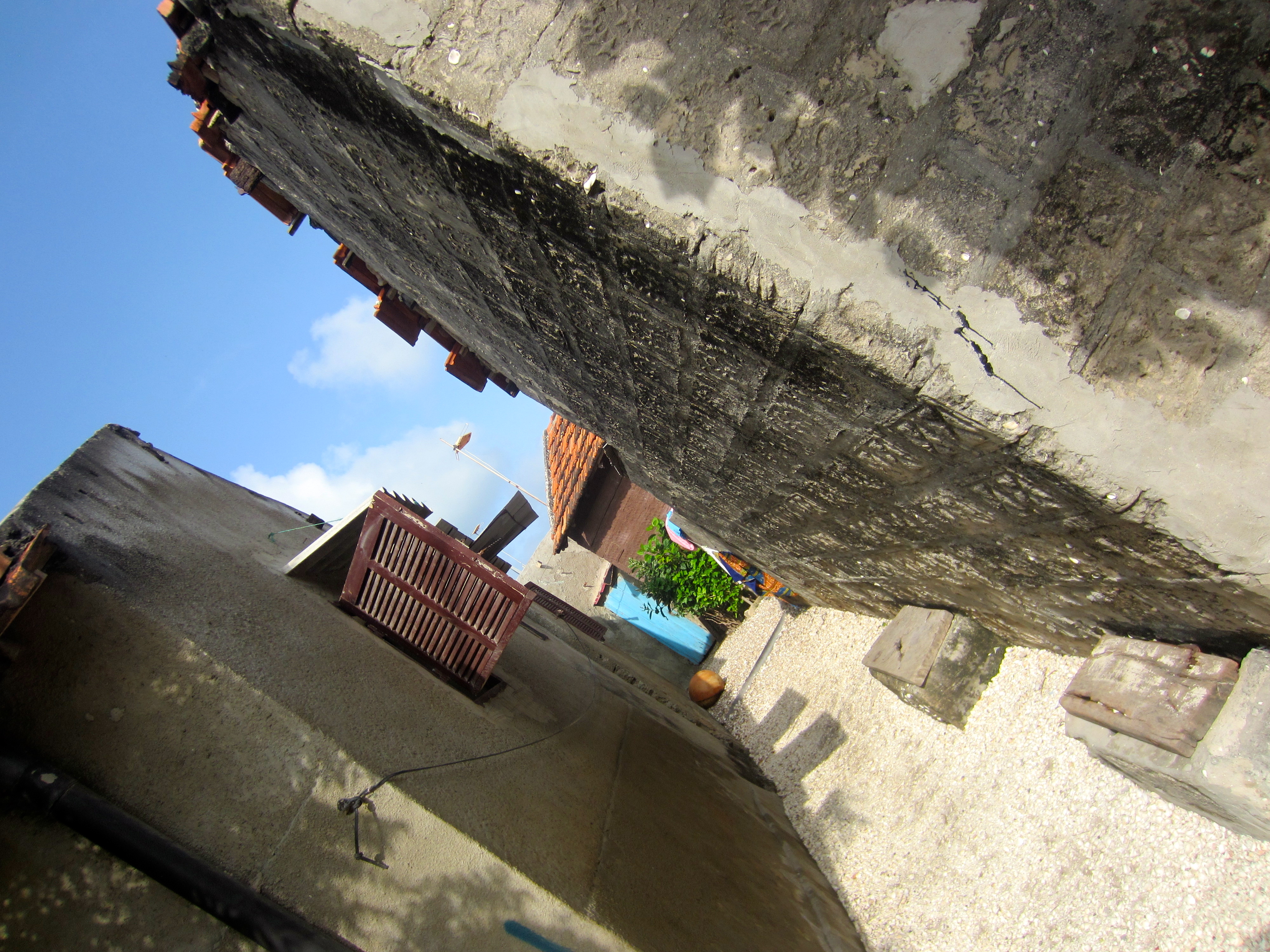
the homes of shell island

the shell island cemetery
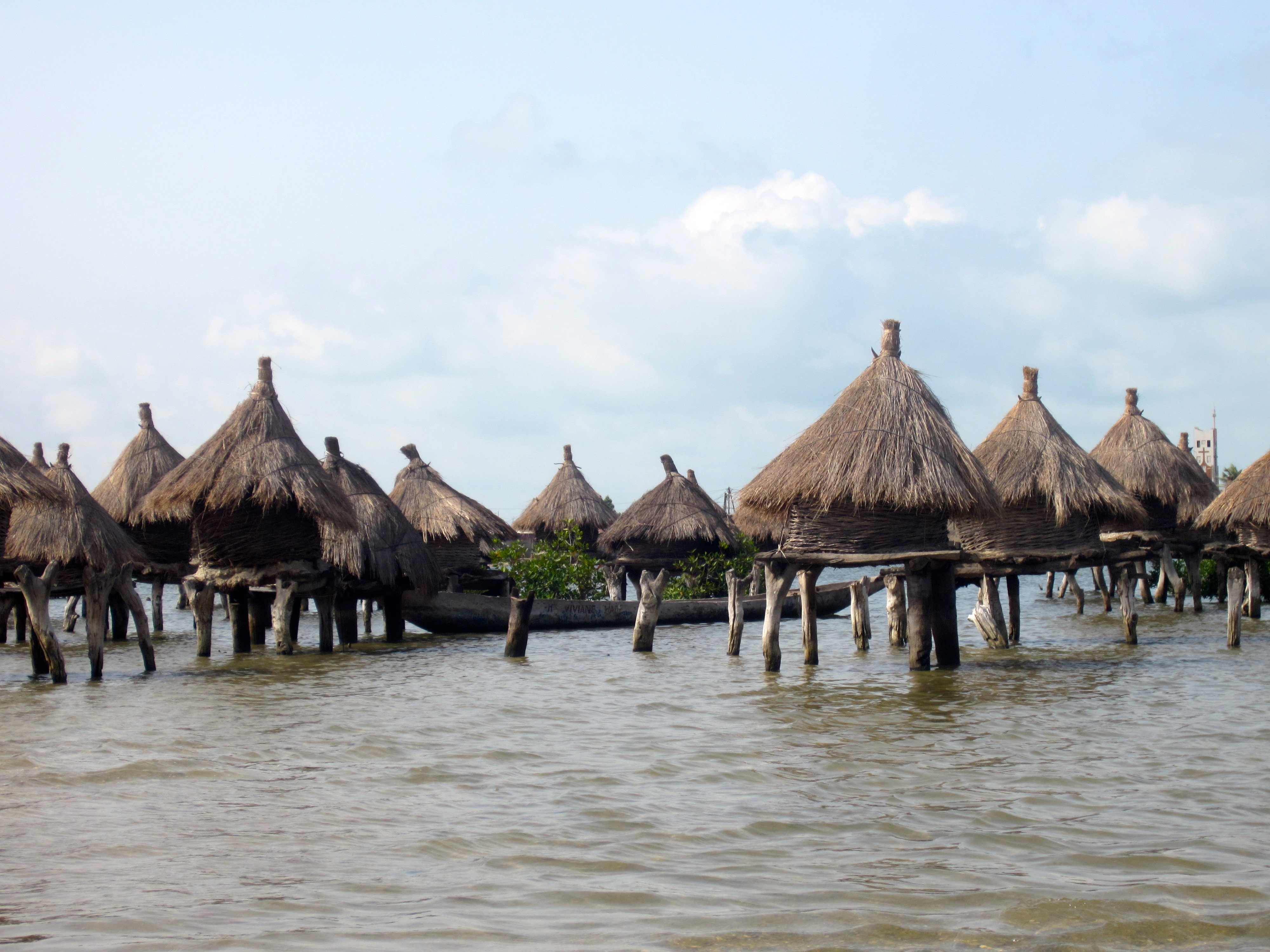
the shell island storage houses
babakar takes us to several street markets where i take in the sights, sounds and smells. street markets are where i feel i get a most authentic look at the way of life of locals. one can find any and everything needed … from live animals (goats, horses, cows, donkeys, chickens), to handmade artwork, food prepared over small fires and grease pans, an amazing assortment of fresh fruits and vegetables, soaps, clothing, fabrics, jewelry, medicines, perfumes, local sweets …. i love to watch people haggle good-naturedly over prices while others just pass the time talking, nursing babies, tending their goods, calling out for customers, laughing, smiling, singing … they appear to be so joyful and content and in such an un-hurried way. babakar tells me there is a saying in senegal: “in the west, time kills people; in senegal, people kill time”. i love this. i look around and that is what i see – people killing time and enjoying the moment in which they are living. they are not looking toward next year or next week or even tomorrow, they are living on senegalese time, in this moment. again, i am reminded of the island nation of the caribbean that i feel such a deep connectedness to and i am at once happily homesick and incredibly thankful.

the fish market

the street market
i spend a few days meandering the streets and beaches of saly. i wander into a pizza restaurant, lured by the smells of shisha. mohamed, the owner of this gem, is lebanese. he has lived in holland for over 20 years and has only been in senegal for about a year. he moved to here for health reasons and has found a love for the relaxed and vibrant people of this west african nation. i spend a few afternoons learning “expat hints” for senegalese living while smoking hookah with mohamed. later, i find a great little restaurant on the beach whose name literally translates to “fish and shower” because you are showered by the sea as you eat the freshest sea treasures. it is here that when i order lobster the owner sends his son out on a surf board. i watch the young boy paddle out, pull up a trap, pile it onto his board, and paddle back in. a few minutes later the owner is standing over me with live, squirming lobster and a broad grin on his face. the lobster is delicious, paired with grilled fish, amazing prawns, rice & onion sauce, and senegalese red wine. i spend the entire afternoon in this beach spot gazing out at the ocean, hearing the locals at the market calling to passers-by, smelling the salt in the air and the fish on the grill, and watching kids swim and play on the beach.
it is the beginning of the rainy season while i am here. one afternoon the bottom drops out of the sky as sheets of rain come down on the beach. i strip off my cover-up and swim through the rain storm. what an amazing feeling – the cool rain meeting the warm water – marie & i are the only people in sight and i am content beyond words, laughing and splashing about in the water … i find myself thinking “this could only be better if i were able to “skinny dip” (which i don’t dare in a muslim nation during ramadan!) it’s also mango season and i take full advantage, eating fresh, juicy, sweet mango every chance i get … desert, breakfast, on picnics …. i love to cut all of the meat off of the fruit and eat what’s left of the pit as the juices run all over. i can’t believe how sweet this fruit is. i find myself saying over and over again “it will make you believe in god”.

mango season!
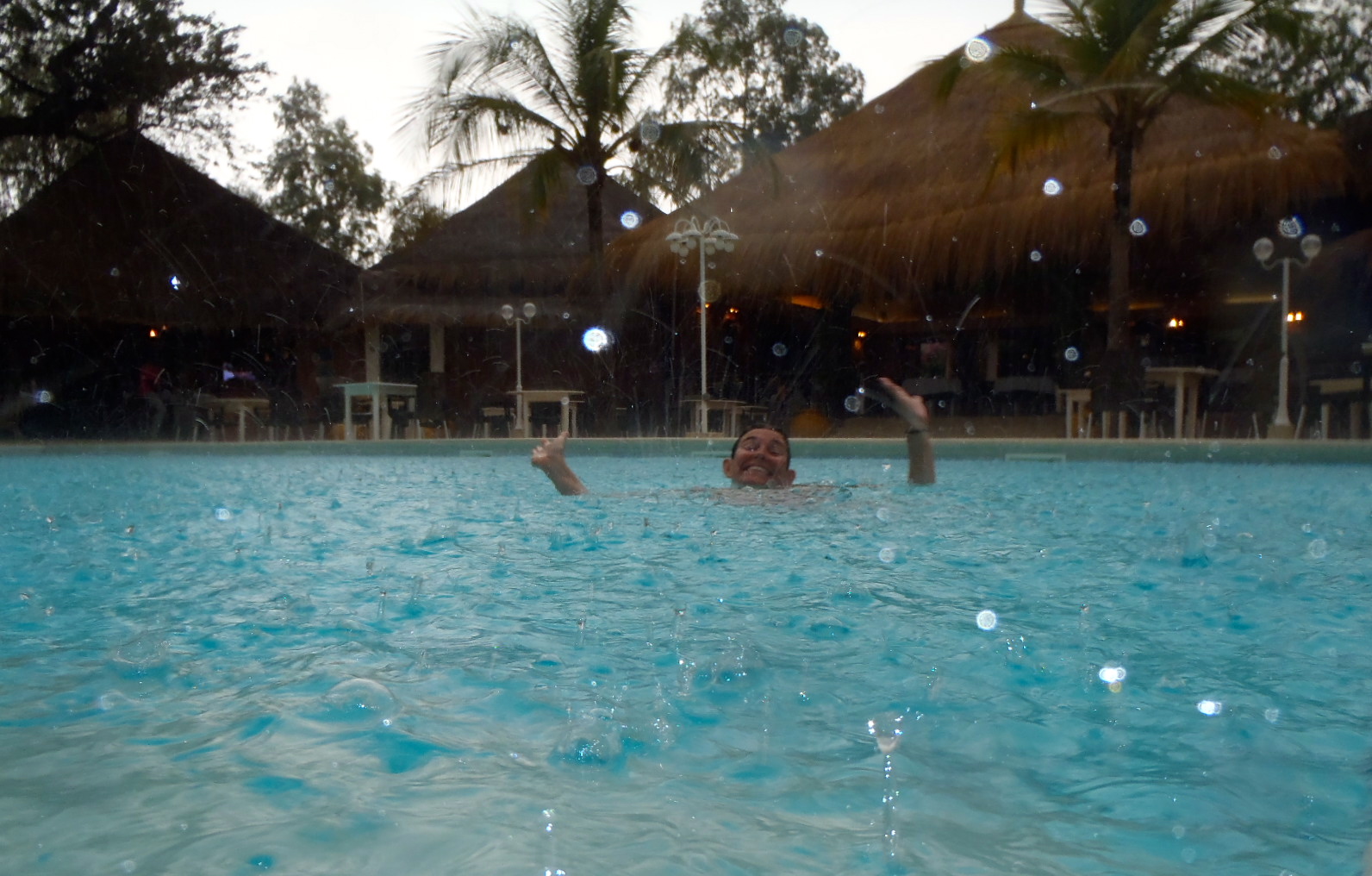
swimming in the rain!
i am mesmerized by the mysticism of senegal. while it is a muslim nation with 10% of the population represented by catholics, the people here have a strong connection to their ancestry from the days of “voodoo” and animists religious practices. most people of senegal still use a “talisman” (an elder who is a spiritual guide in these ancient religions) to help guide their daily lives, look for solutions to problems, and guide in decision making. lucky for me, deni makes friends with one of the workers at our hotel who is able to set up a meeting between myself and his talisman. i am intrigued. the first day, i arrive at the talisman’s home which is about 30 minutes outside of town, surrounded by a palm-frond fence with a large mango tree in the middle of the yard. goats munch on mango leaves, small children are all over the yard, as women lie on mats in the yard. i enter the 2-room concrete house by the door which is ‘closed’ by a sheet. we sit on the straw mat in the middle of the floor and the talisman lights candles and incense. deni’s friend is with me to act as a translator because the talisman speaks no english and french is certainly not good enough for this conversation! i discuss my “problem” with the talisman, complete several short rituals, and am told to return the following day. i leave with a mind full of questions. the next day i return to the smiling talisman who has the small, make-shift alter lit by candles and i see my name written in several places around the alter. i am given a straightforward answer to my question along with other interesting information that we did not even discuss. the talisman gives me three pendants that he has made using sticks and string to hang in specific places around my home, as well as a bath that i am to wash with on specific days, and sends me on my way! i leave with even more questions and a sense of wonder at this ancient practice.
it is during this trip that i firmly plant in my mind that i will learn a second language in earnest, i.e. become fluent. on this trip i surprise myself with how much i am able to understand (thanks to much time spent in the creole-speaking nation of haiti), but i still have a huge language barrier. i leave senegal determined to conquer my inability to master a second language. wish me luck!
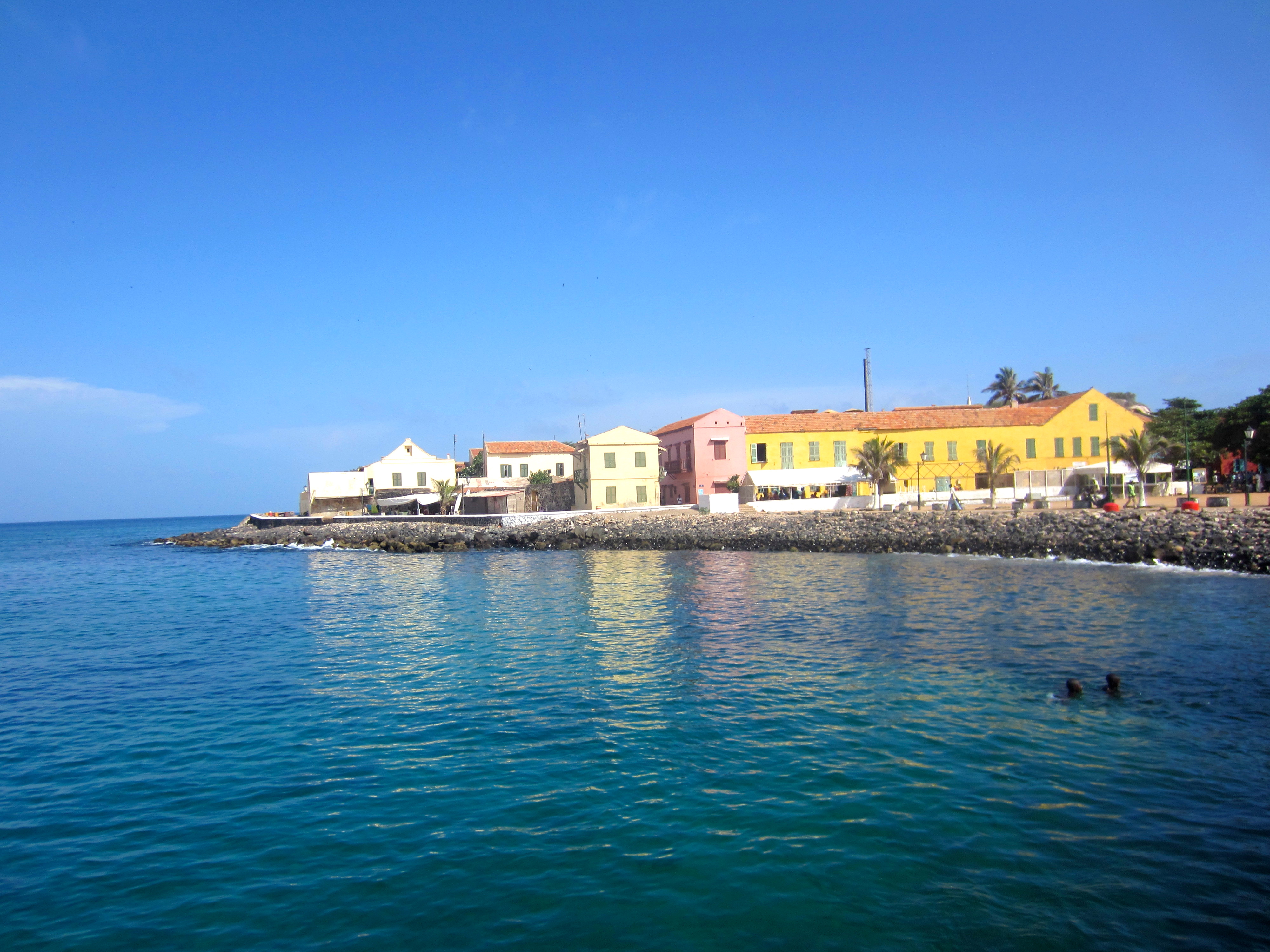
beautiful senegal
 globalmidtown